Monday, August 07, 2006

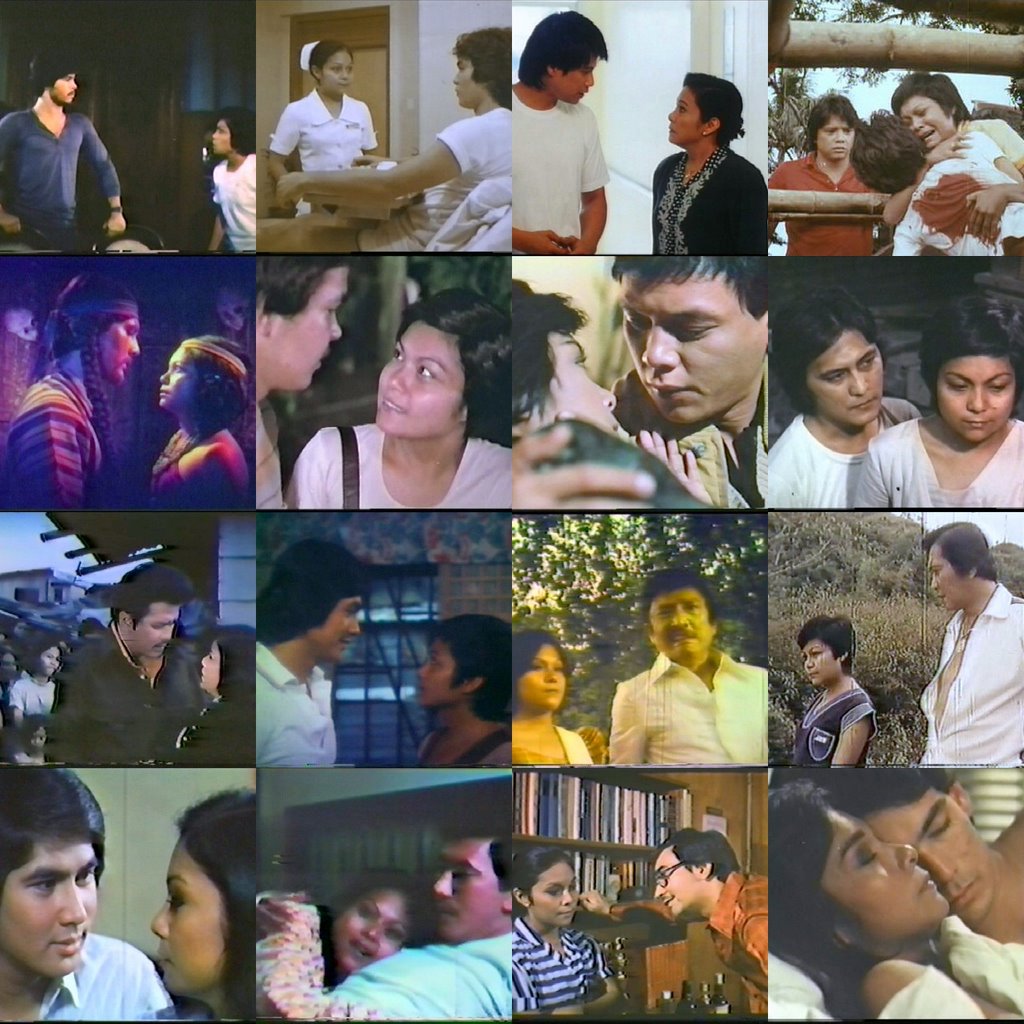
ANG KILABOT NG MGA KOLEHIYALA WITH THE SUPERSTAR


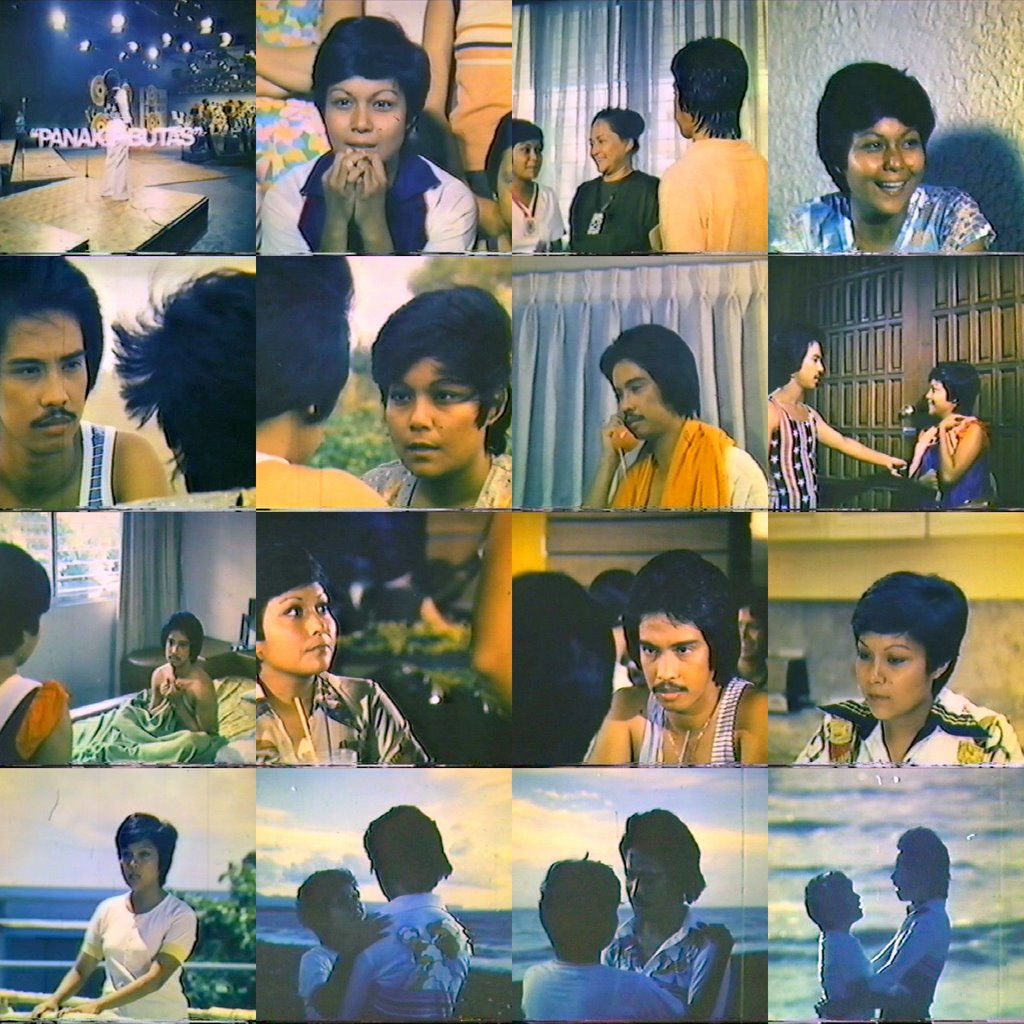
First it was Victor Wood in As Long As There's Music (1974), followed by Rico J. Puno in Disco Baby (1977) then later the same year the Superstar co-starred with the original Kilabot Ng Mga Kolehiyala, Hajji Alejandro in Panakip-Butas, based on a hit song pupularized by the singer in the mid 70's. I remember watching the movie at Cinema 21 in Cubao with my uncle. During the screening there were lots of young women seated at the theater's balcony section swooning over Hajji, but I was there mainly to see the Superstar. Trixia Gomez and Brenda del Rio played his girlfriends while Sandy Garcia was his trusted confidante. Once again, Nora Aunor's comedic talents are on full display here. She's one of those actresses who can be highly effective in comic situations. There was also an abundance of song numbers here. Since Hajji played the role of a singer, all he did in the movie was sing his heart out. There was very little acting involved here. Even the Superstar gets to sing a couple of songs like Minahal Kita, a tagalog version of What I Did For Love and Iniibig Kita, both songs were from her album of the same title. As far as I know, Hajji Alejandro never made a movie after Panakip-Butas. This Regal produced movie was directed by Romy Suzara from a script by Toto Belano. It's one of those films where a fast rising singer tries his hand at making movies and is paired with a hugely popular actress. It may not have created the same following as the Superstar's team-up with Rico J. Puno but Panakip-Butas will always be remembered as the film that launched Hajji Alejandro's movie career.

Sunday, August 06, 2006

THE SUPERSTAR AND HER LEADING MEN

Looking back at most of Nora Aunor's films, I came to realize that there were a number of movies that the Superstar made with actors which I wouldn't have thought she'll have great chemistry with on screen Aside from the obvious choices, perennial screen partner Tirso Cruz III, drama king Christopher de Leon, comedy king Dolphy, action star Joseph Estrada and actor Jay Ilagan, there were male stars that I would never have imagined starring in a movie opposite the Superstar. For instance, when she was paired with 70's screen God Orestes Ojeda in 1978's Huwag Hamakin Hostess, I never thought that the two of them would look perfect together, but to my surprise they did! Their pairing was quite unexpected and not a lot of moviegoers went to catch the movie when it was shown in theaters but this Joey Gosiengfiao directed movie is worth a second look. A bit of warning, Nora's voice was dubbed by someone else and was a little distracting but otherwise, Huwag Hamakin Hostess is pure unadulterated fun.

When Vilma Santos was paired with Phillip Salvador in Rubia Servios (1978), I looked forward to the possibility of the actor teaming up with the Superstar in a movie. This came true when they made Nakaw Na Pag-Ibig in 1980 under Lino Brocka's direction. I was shocked to see the Superstar seducing Robert, Phillip's character in the film. Nora was never known for having done scenes similar to this one but she succeeded with flying colors. Her long quiet glances which conveyed sexual charisma was just the perfect emotion for this particular scene. Another actor known for his movies with the Superstar's archrival was Eddie Rodriguez. In the only film they did together, 1977's Pag-Ibig Ko'y Awitin Mo, I was astonished by their onscreen chemistry! Their's was a different kind of team-up and is surely not to be compared with his film outings with Vilma Santos.

While the Superstar's pairing with then matinee idol Gabby Concepcion in the comedy Totoo Ba Ang Tsismis? (1980) was unexpected, the two actors looked extremely comfortable working in front of the camera. Adding to the movie's kilig factor was a scene where Cora Afable, the nurse taking care of mental patient Gabriel Araneta helps him take a shower in one of the film's key scenes. Once again, this only happens in Nora Aunor films. Fans were excited to have seen them together on the big screen. Moviegoers went in droves to watch the movie making it one of Regal Films' biggest hits. Director Maryo J. de los Reyes who was responsible for the success of this movie did the impossible twenty four years later when he paired rising young actor Yul Servo with the Superstar in the May-December film Naglalayag (2004). In the movie Nora played a Dorinda, a menopausal Judge who got smitten with Noah, a young taxi driver almost half her age. The onscreen chemistry was evident in their first scene together which took place one rainy night. One would believe that they're truly in love with each other.

Of course who can forget the movies she made with Ronald Corveau (Atsay, 1978), Mat Ranillo III (Palengke Queen, 1982), Bembol Roco ('Merika, 1984), Miguel Rodriguez (Tatlong Ina Isang Anak, 1987) and Ronaldo Valdez (Banaue, 1975). But one of those special pairings was with Tommy Abuel in Danny Zialcita's T-Bird At Ako (1982). With both actors playing lawyers in the film, Nora matched Tommy's fire in the courtroom scene. A perfect example of great acting! The scene has to be seen to be believed.

As I continue re-visiting the Superstar's films, I'll post more thoughts on her movies with different leading men. It truly inspires me to take a closer look at her films' that made a huge impact in Philippine Cinema.

Saturday, August 05, 2006

SEXUALITY AND THE SUPERSTAR

For the most part of Nora Aunor's career no one has ever dared to write about sexuality in her films. Unlike archrival Vilma Santos, the Superstar has never dared to venture in movies that dealt primarily with sex. Upon watching some of her films, I came across a select few that openly showed her character's sexualtity. Case in point, while I was watching the complete version of Ishmael Bernal's Ikaw Ay Akin (Tagalog Ilang-Ilang Productions, 1978), I suddenly realized that in every intimate scene she performs in any of her movies there's this sensuality that she generates on screen. Sexy doesn't necessarily mean naked, she barely was in the scene. In the back of my mind, I've always thought that maybe the Superstar's hesitation to do such scenes is just plain awkwardness. There's a possibilty that she might feel uncomfortable undressing in front of the camera.

In that one tender moment between Tere and Rex (Christopher de Leon), their sexual tension exploded on screen. It was one long take and the camera was positioned in such a way where the viewers weren't mere voyuers. The scene had the two of them in close-ups during this act of lovemaking. They were consenting adults who, after five years of being together finally consumated their relationship. It was sensual but nevertheless affecting. Much thought was put into the filming of this sequence. With Bernal's guiding hand, he was able to create one of the most sexually charged scenes in Philippine Cinema which required no nudity.

Thursday, August 03, 2006


Brilliant dementia, harrowing despair. Nora Aunor brings magnificent emotional power as the put-upon fan in Bona, the 1980 film which she produced herself.

A NATIVE RETURNS
By Tito Valiente
Business Mirror, August 3, 2006

At the lobby of Studio 1 of ABS-CBN, a table draped in a wide swath of cloth cradled flowers. Around it were posters of a film copied from old newspapers. A man in business clothes was standing still beside one of the photos. That was the closest they could get near the horizon of a person called Nora Aunor. That night, a copy of "Bona," the movie produced by Aunor and directed by Lino Brocka was going to be screened, the copy provided by Cinematheque Française, a film institution in France that archives excellent cinema. ("Bona" will have its cable television premiere in the Sunday Cine Premiere block of Cinema One on August 20 at 8 pm.)

As with the other guests filing in, people were there with similar purposes. There were the young cineastes who may have read the reviews of "Bona" in various film journals and web sites and blogs, for Bona is one of the most dissected Filipino films. These people may have cited the film as one of their favorite works even if they had not seen it previous to this evening. The sheer presence of the film in the minds and essays of writers and critics was enough to convince them that they were dealing with a work that was benchmarked and graded according to accepted international aesthetics. But there were also middle-aged men moving as one, looking like pilgrims about to approach the inner sanctum of the shrine. They were so quiet that you could feel through their movements the grace of many a Nora Aunor cinematic outings. These are people who could utter word for word, grand inflection for grand inflection, the dialogues that their idol—in the sense of worship and reverence—gave voice to on the silver screen.

It was not merely a voice coming from a body. Nora’s voice in many films, including those that were sinfully trivial and fun, slithered and sauntered out of the screen and into the domain of the popular, the populist, the political. The lines, as well as the characters, from which those meanings sprung transcended the instrument of cinema and became part of the collective yearnings of a mass audience who saw in Aunor not just an actor but someone equipped with a divining rod that could trace the fault lines of a group of people even as it would direct them to the wellspring of their neurosis and salvation.

Aunor’s much-documented celebrity was going to go through a reassessment that night, to check if the books—and essays and poetry—written about her icon were really truthful valuation of her person and her genius and not simply the ranting of academics trying out new theories about popular culture.

Seated as I was at the orchestra, surrounded by fans, I could sense the undertow of nervousness in those faces upturned to the screen; there was also sadness and longing. Most of the people there, I believe, were perched at the edge of their seats, the gurgling in their hearts pushing them almost to the edge of a sweetly welcomed nervous breakdown. Again that night, some simply ceased to be film viewers and moved on to be witnesses of an apparition.

A History Of Tastes

The metaphor of the sacred, the discourse of power, and the narrative of dispossession apply to the audiences of "Bona" as well as to the film. The film opens with the male-dominated procession of the Black Nazarene of Quiapo. Men are throwing their shirts and towels onto the carriage of the Christ icon, to be wiped against the body of the icon. Then the face of Aunor, as Bona, is shown, lost in the crowd, but not lost in the ritual.

The next scenes bring us to what preoccupies "Bona" (other than a religion in display). She is seduced by another faith, as she displays to us an almost reverential and awe-stricken admiration for a bit-player, Gardo. Critics use the word "obsession" to process the relationship that brings Bona to Gardo. But viewing the film again gives us other words. Like irrationality. Like lust and love.

You know, of course, the story. How, one night, Gardo comes home and tells Bona that he is leaving for abroad, and she should just go home. Then how Bona looks at the boiling pot of water. And the rest is cinematic history.

Part of this history is that "Bona" the film and Aunor as Bona have become guideposts for the evolution of film-viewing and re-viewing in the Philippines. Go and run to the nearest library and catch the writeups of that period, when Bona was first screened commercially, and you will see how so much of the appreciation of the film went beyond and behind the cinema. Reporters then wrote how Aunor had to produce the film to convince people that she could act. And yet, Bona was produced in 1980, a full three years after Aunor thundered through the screen in "Tatlong Taong Walang Diyos", and went on to win the Urian for Best Actress that year.

The screening answers many questions but also opens up many more. Given how the screenplay displays an almost reckless disregard for coherence, one could ask now if Brocka really enjoyed Aunor in the film. The film looks like it is meant to showcase another talent, that of Phillip Salvador, thus bringing some critics to describe the film as his film. One could even wonder why Brocka and the writer chose a bit player as the object of Bona’s adoration. This preoccupation with Salvador, however, becomes the bane of the movie.

At the end, Bona is indeed Nora Aunor’s work. Bona is Aunor looking, with a bit of melodrama and masochism, how she, an unknown, has become the object of many people’s adoration, the actor becoming the icon.

The power of the tragedienne/icon in Aunor is that she is able to weave a character into a full functioning tapestry of nerves and magic. Even then, you cannot blame those who genuflect before her when they cite the many gems in Bona. There is Aunor running away from her father, the speed of her escape as frantic and funny as it was demented. Aunor looking from the fence into her home where the wake for her father is taking place, fear and love and anxiety etched in a shot that merely shows one half of her face.
Aunor peeking from the kitchen, tension personified, the rigid figure melting into the loneliest of embraces with her mother, played with brittle tenderness by Rustica Carpio. Then, there is that scene—when she throws the boiling caldron of water onto Gardo’s body, the wretchedness on her face a troubling chemistry of dementia and despair, and a rage that seems to travel from her scarred soul, in a nuanced form that only Aunor could summon.

You can look for more, but at the end, there is one lesson: Nora Aunor is second to none and no one follows after her. Not yet, anyway. I knew this when I stepped out of the Studio One into the lobby once more. The table that held the flowers was shrouded in black, more like in mourning for the passing of good films that we used to make, and for an actor like Aunor, whose genius might as well be dead in our dreary landscape of commercialism and bad taste.
Wednesday, August 02, 2006


THE SUPERSTAR... Past And Present
By Gerard Ramos
Business Mirror August 2, 2006

I would have wanted to continue from my recollection last week of the great artist that is Nora Aunor by starting this piece with a meditation on Bona, her third and last collaboration with the director Lino Brocka which was originally released in 1980, and which showcases what is widely regarded as one of the two most magnificent performances by an artist whose filmography is marked by many brilliant performances that remain without peer. (The other one is, of course, in the Ishmael Bernal classic Himala, released in 1982.) However, film and media critic and BusinessMirror columnist Tito Valiente had the privilege of witnessing the recent "homecoming" of Bona, which was financed and produced by Nora’s NV Productions but remained until recently in the property of the French, and thus would be in a better position to ruminate on the film and the awesome power that Nora brings to it beyond the confines of her titular character. He recasts the film in his column tomorrow.

That Bona has come home after more than two decades of being "lost" through questionable circumstances should be cause for celebration—certainly for Noranians, which remain legion and loyal, once more to be richly rewarded for their fidelity by a new viewing of The Superstar’s bravura portrayal of the stereotypical dakilang alalay.

It is, however, a temporary palliative to the profound sense of loss shared by Nora’s fans here, having lost this great artist to the US, which she has chosen as her base over the past few years.

The sense of loss has become even more acute in the face of the utter bankruptcy of anything remotely genuine—emotionally, intellectually—in the current output of the mainstream film and television industries. Long gone are the days when even the guilty pleasure of watching entertainment television seemed not so guilty as Nora, along with her cohorts in Ang Makulay na Daigdig ni Nora on RPN, Nora on ABC and Star Drama Presents Nora on ABS-CBN, usually succeeded in infusing the soap operatic inclinations of the drama anthology genre with glimmers of profound truths about us as a people and as a society. These days, what we get in lieu of the kind of dramatic heft that provides moments of self-reflection are a lot of screaming and plenty of heaving bosoms from Angel Locsin, usually an affecting young actress who seems short-circuited by the utter banality of her top-rating fantaserye Majika on GMA, and her costar Katrina Halili, whose skills beyond keeping her mouth in a perpetual grimace remain totally missing in action.

The situation, unfortunately, is no better in films, with filmmakers already beleaguered ostensibly by the unimpeded flow of foreign products, which is their common and usual complaint, although the movie industry’s greed and shortsightedness have contributed to their misery in no small measure. Consider the current offering of Star Cinema, Sukob, which—for all the valiant efforts of main stars Kris Aquino and Claudine Barretto to inform the proceedings with emotional weight—is ultimately stripped of that clammy sense of dread as it ridiculously mixes local folklore with the staples of Japanese horror films. For more interesting pieces of cinema, you now have to go to independent filmmakers, which Nora Aunor may as well have been back then when she bet her own money on projects, 1975’s Banaue, 1977’s Tatlong Taong Walang Diyos and 1978’s Atsay, to name a few, that would’ve been a tough sell were it not for the fact that they were headlined by Nora herself, for whom the title "Superstar" was coined for reasons beyond reproach.

Of course, it may be argued that Nora Aunor has become irrelevant in the current landscape of popular culture, and her detractors no doubt will be quick to cite as proof her own decision to relocate to the US, where her public continues to be most supportive and appreciative of her craft.

Then again, that irrelevance would be a damning reflection of the vacuity of our own lives where we no longer care to wrestle with the ugly truths regarding ourselves and our place in society, rather than an indictment of Nora Aunor and her artistry.

Some minor corrections on the article:

Bona was not the last Nora Aunor-Lino Brocka collaboration, they did the film Dalaga Si Misis, Binata Si Mister together in 1981.

Tatlong Taong Walang Diyos was released in 1976, and Atsay was produced by Romy Ching's IAN Film Productions